Maternity Pads vs Sanitary Pads: 8 Key Differences (Are They the Same?)
Quick answer: No, maternity pads are not the same as sanitary pads. Maternity pads are made for bleeding after childbirth (lochia). They are much longer (around 400–450 mm), wider at the back, softer and far more absorbent, often 500–800 ml. Sanitary pads (also called period pads, normal pads or sanitary towels) are made for monthly periods. They are usually 230–320 mm, thinner, and hold much less. Use maternity pads for the first days and weeks after delivery. Switch back to normal pads once your bleeding is light.
If you're packing for delivery, you've probably wondered whether you really need special maternity pads or whether your usual sanitary pads will do. The two look alike on the shelf, but they are made for very different jobs. This guide explains the difference between maternity pads and sanitary pads, when each one makes sense, and when you can safely switch from one to the other.
Are maternity pads the same as sanitary pads?
No. Both are disposable pads worn in underwear, but they are built for different kinds of bleeding:
- Maternity pads are for postpartum bleeding, called lochia. It is heaviest in the first 3–4 days after delivery, often heavier than any period, and it can include clots. You also spend a lot of time lying down, so leaks tend to happen at the back.
- Sanitary pads are for menstrual periods, which are lighter and shorter. They are designed to be thin and discreet so you can move around normally.
So "maternity sanitary pads" or "maternity sanitary napkins" are simply sanitary pads made specially for after childbirth. They are a separate product from your regular period pads.
Maternity pads vs sanitary pads: 8 key differences
| Feature | Maternity pads | Sanitary pads (normal / period pads) |
|---|---|---|
| Made for | Postpartum bleeding (lochia) after normal or C-section delivery | Monthly periods |
| Length | Extra long, usually around 400–450 mm | Usually 230–320 mm (regular to XL) |
| Width & shape | Wide all over, with an extra-wide back for lying down | Narrow, contoured to fit closely |
| Absorption | Very high; good brands state 500–800 ml | Much lower, made for normal period flow |
| Thickness | Thicker and cushioned | Often ultra-thin |
| Top sheet | Extra soft and breathable, gentle on stitches | Soft or dry-net; some are scented |
| Holding it in place | Adhesive strip, often used with maternity pants or a fixator | Adhesive strip and wings that fold over underwear |
| How long you use them | First 1–3 weeks after delivery, while bleeding is heavy | Every period, for years |
Why the difference matters after delivery
In the days after birth, your uterus sheds its lining and heals the place where the placenta was attached. This bleeding is heavier and lasts longer than a period. A normal pad can fill up in a short time, and leaks are most likely at night when you lie on your back. Maternity pads deal with this in three ways:
- More capacity. A super absorbent polymer (SAP) core locks fluid in as a gel, so you stay drier between changes.
- More coverage. The extra length and wide back catch flow when you are lying down or feeding your baby.
- More comfort. A soft, breathable surface is kinder to stitches after a normal delivery and to sensitive skin.
Can you use sanitary pads instead of maternity pads?
For the first few days, regular sanitary pads (or "sanitary towels") are usually not enough. You may need to change them very often, and they can leak at the back. Some mothers wear two pads at once, but that is bulky and shifts easily.
Normal pads do become useful later in recovery. Once your bleeding has turned light pink, brown or yellowish-white and you are changing less often, an XL or overnight sanitary pad is often enough.
Avoid tampons and menstrual cups after delivery until your doctor says it is safe, usually after your postpartum check-up at around 6 weeks. They can raise the risk of infection while your body heals.
When to switch from maternity pads to normal pads
| Time after delivery | Typical bleeding | What to use |
|---|---|---|
| Days 1–4 | Heavy, bright red, may include clots | High-absorbency maternity pads (500–800 ml), with maternity pants or a fixator |
| Days 5–10 | Moderate, pinkish or brown | Maternity pads at night; a lighter maternity pad in the day |
| Weeks 2–3 | Lighter, brownish | Lighter maternity pads, or XL / overnight sanitary pads |
| Weeks 3–6 | Light, yellowish-white spotting | Regular sanitary pads or panty liners |
Everyone heals differently, and bleeding after a C-section is often a little lighter. Go by your own flow rather than the calendar.
Can you use maternity pads for periods?
Yes. Maternity pads work for very heavy periods or as overnight protection, and some women keep leftover packs for this. For a normal period they are usually more pad than you need. They are longer and thicker than a period pad, and many have no wings. For everyday periods, a thin XL pad or a period panty for heavy nights is more comfortable.
Sanitary towels, sanitary napkins, normal pads: same thing?
Yes. "Sanitary towels" is the term used in the UK, while "sanitary napkins" and "sanitary pads" are more common in India. "Normal pads", "regular pads" and "period pads" all mean everyday menstrual pads. So "maternity pads vs sanitary towels" and "maternity pads vs period pads" are the same question, and the answer above applies.
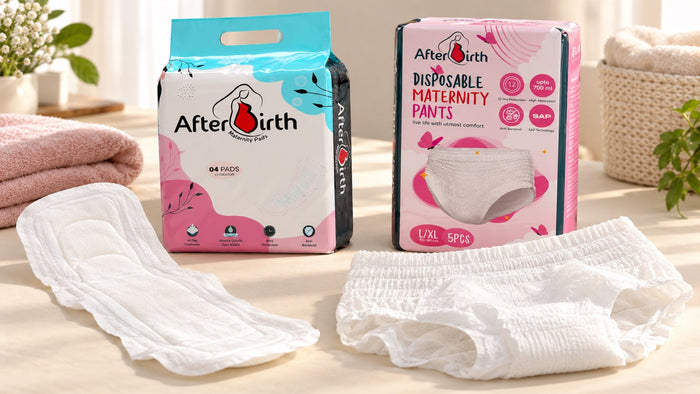
A real example: two Sheril Healthcare pads compared
Here is how one of our maternity pads compares with one of our period pads, using the specifications printed on the packs:
| AfterBirth Maternity Pads | Maxzorb Evaa Ultra Thin Sanitary Pads XL | |
|---|---|---|
| Use | After delivery | Periods |
| Size | 430 × 190 mm | 280 mm, with wings |
| Absorption | Up to 800 ml, Japanese Sumitomo SAP | High-absorption core for periods |
| Feel | Perforated cotton surface, extra-wide back | Ultra thin, cotton-soft top sheet |
| Pack | 4 pads + 1 fixator | 6 pads |
For lighter days later in recovery there is AfterBirth Ez (up to 500 ml, pack of 5). To keep pads from shifting, pair them with AfterBirth Maternity Pants or a pad fixator.
Frequently asked questions
What is the difference between maternity pads and sanitary pads?
Maternity pads are made for bleeding after childbirth. They are longer (around 400–450 mm), wider, softer and much more absorbent, often 500–800 ml. Sanitary pads are made for periods. They are shorter (230–320 mm), thinner, and hold far less.
Are maternity pads the same as sanitary towels?
No. Sanitary towels is another name for regular period pads. Maternity pads are a separate, larger and more absorbent pad made for postpartum bleeding.
Can I use normal pads after delivery?
Not in the first days, when bleeding is heaviest; normal pads fill up quickly and can leak. Once bleeding becomes light, usually after 2–3 weeks, an XL or overnight sanitary pad is often enough.
Can you use sanitary towels instead of maternity pads?
Only once your flow is light. In the first week you will need to change sanitary towels very often and may leak, so maternity pads are the better choice then.
How long do you need maternity pads after birth?
Most women use maternity pads for the first 1–3 weeks, then move to regular pads or liners. Postpartum bleeding can continue on and off for up to about 6 weeks.
Can I use maternity pads for my period?
Yes, for very heavy periods or overnight. For a normal period they are usually bulkier than you need.
Are maternity pads better after a C-section too?
Yes. You still bleed after a C-section, though often a little less. Maternity pads with high-waisted maternity pants are comfortable because nothing presses on the wound.
Why can't I use tampons or a menstrual cup after delivery?
Doctors usually advise against anything inserted into the vagina until your postpartum check, around 6 weeks, to lower the risk of infection while you heal. Use pads until then.
Want the full shopping guide? Read Best Maternity Pads in India and What Are Maternity Pads?, or see whether you need maternity pads, maternity pants or adult diapers. Packing now? Use our hospital bag checklist.
This guide is general information, not medical advice. Contact your doctor straight away if you soak through a pad in an hour or less, pass clots larger than a small lemon, or have fever, a foul smell or dizziness.