Maternity Pads vs Adult Diapers vs Maternity Pants: What to Use After Delivery
Quick answer: After delivery, most mothers need maternity pads, held in place by disposable maternity pants or a fixator. This pair is what people usually mean by a "maternity diaper". Adult diapers are made mainly for urine incontinence. They are bulkier and hotter than you need, so they are only useful in special cases, such as when you can't get up to change for a long time. For the first nights and after a C-section, maternity pants plus a high-absorbency maternity pad give the best leak protection.
"Should I buy maternity pads, adult diapers or maternity pants for after delivery?" is one of the most common questions in the final weeks of pregnancy. All three can handle postpartum bleeding, but they differ in fit, comfort and cost. Here is how to choose.
What is a "maternity diaper"?
There is no separate medical product called a maternity diaper. When people search for "maternity diaper" or "maternity diaper pants after delivery", they usually mean one of two things:
- Disposable maternity pants: soft, stretchy pull-up pants worn like underwear. They hold a maternity pad in place and some, like AfterBirth Maternity Pants, have their own absorbent layer for extra protection.
- Adult diapers or adult pull-ups used after delivery as an "all-in-one" option.
Maternity pads vs adult diapers vs maternity pants
| Maternity pads | Maternity pants | Adult diapers | |
|---|---|---|---|
| Made for | Postpartum bleeding | Holding pads securely after delivery; extra absorbency | Urine incontinence |
| How you wear it | Inside underwear, pants or a fixator | Pulled on like underwear | Taped around the waist, or a pull-up |
| Comfort | Light, easy to change often | Soft and stretchy, high waist sits above C-section wound | Bulky and warm for all-day wear |
| Leak protection | Good, better with pants or a fixator | Very good when used with a pad | Very good, but more than most mothers need |
| Changing | Change just the pad | Change the pad often, the pant less often | Change the whole diaper each time |
| Best for | Day and night, all weeks of recovery | Hospital stay, first nights, C-section | Limited mobility or long stretches without changes |
Why maternity pads are the main choice
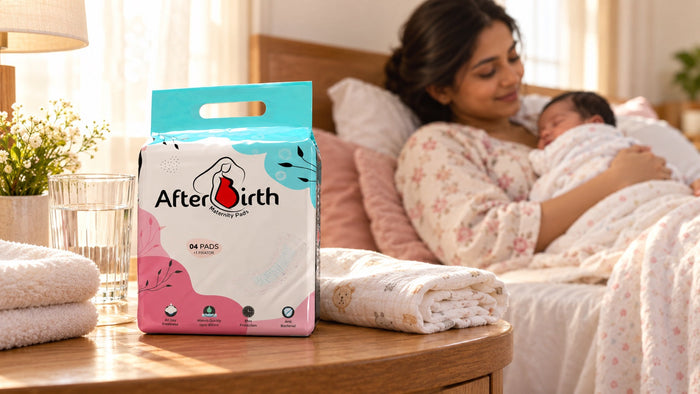
Maternity pads are designed around postpartum bleeding. They are long, wide at the back, soft on stitches, and made for frequent changes. Each change uses just a pad, not a whole garment, so they are usually the most practical and economical option for the 2–3 weeks you need them. Read What Are Maternity Pads? for how to use them.
When maternity pants make sense
- In the hospital and the first 2–3 nights, when bleeding is heaviest and you're lying down.
- After a C-section: a soft, high waist sits above the wound instead of pressing on it.
- If pads keep shifting in normal underwear.
- For hygiene: you can throw them away instead of washing blood-stained underwear.
AfterBirth Maternity Pants come in size L/XL (45–60 cm), 5 pants per pack, with an absorbent layer rated up to 700 ml on the pack. Use them together with a maternity pad, and change the pad often.
When are adult diapers useful after delivery?
Adult diapers can help in a few situations:
- You can't get up to change for long periods, for example after a complicated delivery.
- You also have significant urine leakage, not just bleeding.
- Long journeys home from the hospital where changing isn't possible.
For most mothers, adult diapers are more than needed. They are designed mainly for urine, warmer to wear all day, and you change the whole diaper each time. If you do use them, change them as often as you would a pad, keep the area clean and dry, and choose a breathable one in the right size. See our adult diaper size guide.
A simple plan for after delivery
| When | What to use |
|---|---|
| Hospital and days 1–3 | AfterBirth Maternity Pads (up to 800 ml) inside maternity pants, day and night |
| Days 4–10 | Maternity pads with maternity pants at night, a fixator or your own underwear in the day |
| Weeks 2–3 | Lighter AfterBirth Ez pads (up to 500 ml) with a fixator or underwear |
| Week 3 onwards | Regular sanitary pads or liners as bleeding becomes light. See when to switch to normal pads |
Not sure whether you need pants or a fixator? Read Maternity Pants vs Pad Fixator.
Frequently asked questions
Is a maternity pad better than an adult diaper after delivery?
For most mothers, yes. Maternity pads are made for postpartum bleeding, are lighter and cooler to wear, and you only change the pad. Adult diapers are made mainly for urine incontinence.
What is a maternity diaper?
It usually means disposable maternity pants, which are pull-up pants worn after delivery to hold a maternity pad and add leak protection. Some people also use the term for adult diapers.
Can I use adult diapers after delivery?
Yes, if you can't change often or also have heavy urine leaks. For everyday use, maternity pads with maternity pants or a fixator are more comfortable.
Do I need maternity pants with pads?
They are not essential, but they help a lot in the first days and after a C-section by holding the pad firmly and adding extra protection. Later, a fixator or close-fitting underwear is enough.
Are maternity pants good after a C-section?
Yes. Soft maternity pants with a waistband that sits above the wound are comfortable and keep the pad in place without pressure on the stitches.
How many maternity pants do I need?
Many mothers use 1–2 pants a day in the first week, changing the pad inside more often. A pack or two covers the hospital stay and first nights.
Comparing brands? Read Best Maternity Pads in India and pack with our hospital bag checklist.
This guide is general information, not medical advice. Contact your doctor if you soak through a pad in an hour or less, pass large clots, or have fever, a foul smell or dizziness.